Multi-Tenant AI Billing: Stop Losing Your SaaS Margins
Building generative AI features into B2B SaaS products introduces a fundamental economic problem: you are selling fixed-price subscriptions, but your infrastructure costs are uncapped and highly variable. To survive, you must implement a robust multi-tenant AI billing architecture.
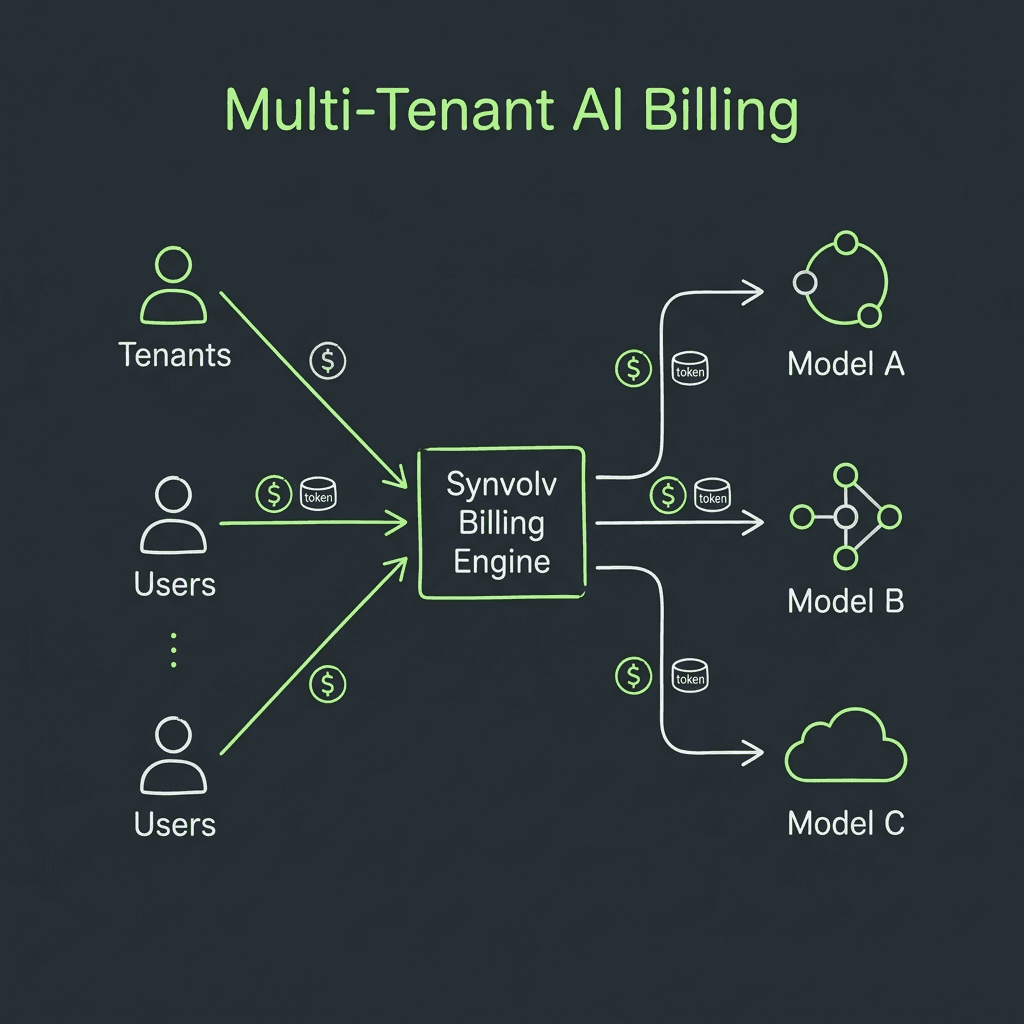
If a single enterprise tenant writes an infinite loop against your RAG endpoint, they can consume thousands of dollars in OpenAI tokens over a weekend. You need the ability to attribute every token to a specific workspace, calculate the cost dynamically, and either bill the customer via usage-based pricing or enforce a hard budget cutoff.
This guide details the exact architecture required to build a multi-tenant LLM chargeback model, how to safely integrate OpenAI cost allocation with Stripe, and why intercepting requests at the edge is the only reliable way to protect your margins.
The Core Requirements for AI Billing
Building a multi-tenant billing engine requires solving two distinct distributed systems problems in real-time: Identity and Economics.
Identity: Mapping Workspaces to Requests
Relying on client-side headers or trusting the frontend to pass a tenant_id is a security risk. Your backend must inject a verified identifier (such as a validated Workspace ID) into the metadata of the outbound LLM request. The proxy layer intercepts this request, strips the internal metadata before forwarding it, and uses that identifier as the partition key.
Economics: Token Estimation at the Edge
If you are enforcing hard budget limits (e.g., cutting off a user the millisecond they exceed their allowance), asynchronous logging fails. By the time the event is processed by Kafka, the user has already sent 10 more concurrent requests.
To enforce budgets synchronously, your proxy must:
- Estimate Input Tokens: Run a lightweight tokenizer on the prompt at the edge before forwarding the request.
- Check Balances: Query a low-latency datastore to ensure the tenant's current accumulated spend plus the estimated cost does not exceed their limit.
- Count Output Tokens: Parse the returning streaming chunks, count them, and deduct the final total from the tenant's balance.
Architecture: Building the Billing Engine
A production-grade multi-tenant AI billing engine consists of a high-performance proxy layer and a durable database/billing synchronization layer.
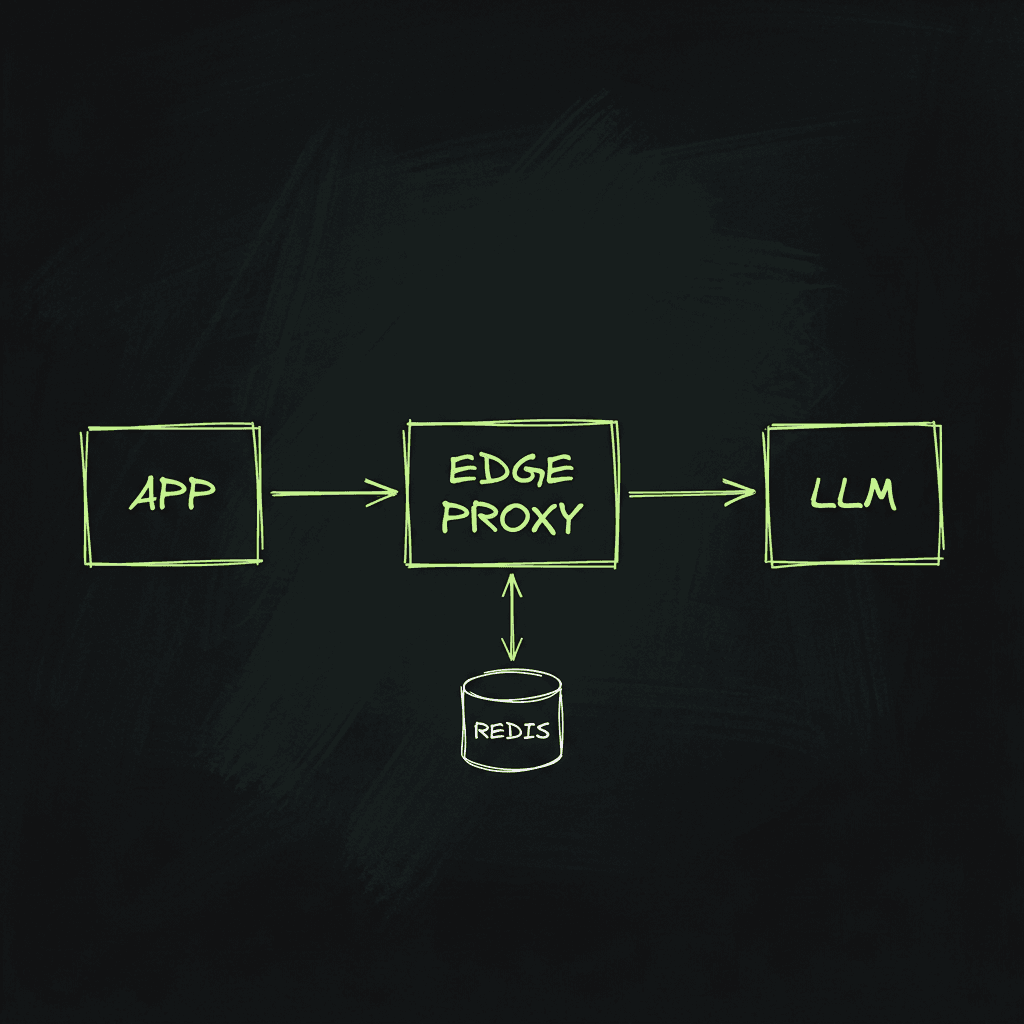
The Proxy Layer (Redis + Lua scripts)
Because this proxy sits in the critical path of every LLM request, latency is paramount. You cannot do Postgres lookups for every token check. The standard pattern is to use an edge-deployed proxy backed by Redis using Lua scripts for atomic deductions.
Critical Architecture Warning
Never track financial budgets using floating-point numbers (INCRBYFLOAT), as distributed rounding errors will compound. Convert your $0.00001 token costs into integer micro-cents. Furthermore, do not initialize the tiktoken BPE dictionary on every request; the memory overhead will add 150ms of latency. It must be instantiated globally and cached in memory.
-- KEYS[1]: tenant_budget_key -- ARGV[1]: estimated_cost_microcents (Integer) -- ARGV[2]: max_budget_limit_microcents (Integer)localcurrent_spend =tonumber(redis.call("GET", KEYS[1])or"0")localestimated_cost =tonumber(ARGV[1])locallimit =tonumber(ARGV[2])ifcurrent_spend + estimated_cost > limitthenreturn-1-- Budget Exceeded (Return 402)elseredis.call("INCRBY", KEYS[1], estimated_cost)returncurrent_spend + estimated_cost-- Successend
The Database Layer (Postgres + Stripe Synchronization)
To implement usage-based pricing, you will push aggregated data to the Stripe Meter Events API.
Warning: Do not push individual LLM requests to Stripe synchronously. You will hit rate limits. Use a background worker to batch-process usage. Most importantly, you must supply a cryptographically secure idempotency_key. Without it, if your worker crashes during a network timeout and retries, Stripe will record the usage twice, double-billing your customer.
// Example Node.js worker batching usage to Stripeconststripe =require('stripe')(process.env.STRIPE_SECRET_KEY);constcrypto =require('crypto');async functionreportTenantUsageBatch(tenantId, tokensUsed, batchId) {// Generate a deterministic idempotency keyconstidempotencyKey = crypto.createHash('sha256') .update(`${tenantId}-${batchId}`) .digest('hex');awaitstripe.billing.meterEvents.create({ event_name: 'llm_tokens_consumed', payload: { value: tokensUsed, stripe_customer_id: tenantId, }, timestamp: Math.floor(Date.now() / 1000), }, { idempotencyKey: idempotencyKey// Prevents double-billing}); }
Why You Shouldn't Build This Internally
The architecture described above works, but maintaining it at scale introduces severe operational friction:
- Streaming Complexities: While OpenAI recently introduced
stream_options: {include_usage: true}to return final token counts, you must still forcefully terminate the socket connection mid-stream if a user blows past their budget during a massive, long-running generation. - Model Price Fluctuations: You aren't just counting tokens; you are tracking cost. OpenAI changes pricing dynamically (input, output, and cached tokens are priced differently). When OpenAI drops prices, your proxy's internal pricing ledger must be updated instantly, or your margin calculations will drift.
- The RAG Multiplier: Retrieval-Augmented Generation injects massive context windows. If your proxy's tokenizer is slow, synchronously estimating the cost of a 100,000-token payload will block the event loop and add hundreds of milliseconds of latency.
Building an LLM proxy is easy. Building a distributed, highly-available, financial-grade billing ledger that operates in under 10 milliseconds is an entirely different engineering discipline.
Automate Multi-Tenant Billing with Synvolv
Synvolv is a runtime AI spend management platform designed to solve the multi-tenant billing problem. Instead of managing Redis and syncing token states to Stripe manually, you route your requests through the Synvolv control plane.
- Native Identity: Pass your tenant ID in the header. Synvolv maps the request automatically.
- Synchronous Enforcement: Synvolv estimates token costs, checks the tenant's exact budget limit, and gracefully rejects the request with a
402 Payment Requiredif they are out of funds—before the request ever hits OpenAI. - Turnkey Stripe Integration: Synvolv natively synchronizes usage data with Stripe Metered Billing. No custom workers or webhooks required.
// Replace 500 lines of custom billing logic with the Synvolv SDKimport{ Synvolv }from'@synvolv/sdk';importOpenAIfrom'openai';constsynvolv =newSynvolv({ apiKey: process.env.SYNVOLV_KEY });constopenai =newOpenAI({ baseURL: synvolv.gatewayUrl, apiKey: process.env.OPENAI_KEY });// Synvolv automatically associates the cost to 'tenant_402' // If 'tenant_402' is out of budget, Synvolv throws a 402 Error.constresponse =awaitopenai.chat.completions.create({ model: 'gpt-4o', messages: [{ role: 'user', content: 'Summarize this document.' }], }, { headers: { 'x-synvolv-tenant-id': 'tenant_402' } });
Stop reading post-mortems and worrying about why observability tools fail at synchronous enforcement. Start actively protecting your margins.