How AI Products Quietly Become Unprofitable
The engineering and economic challenges of per-tenant margin control.
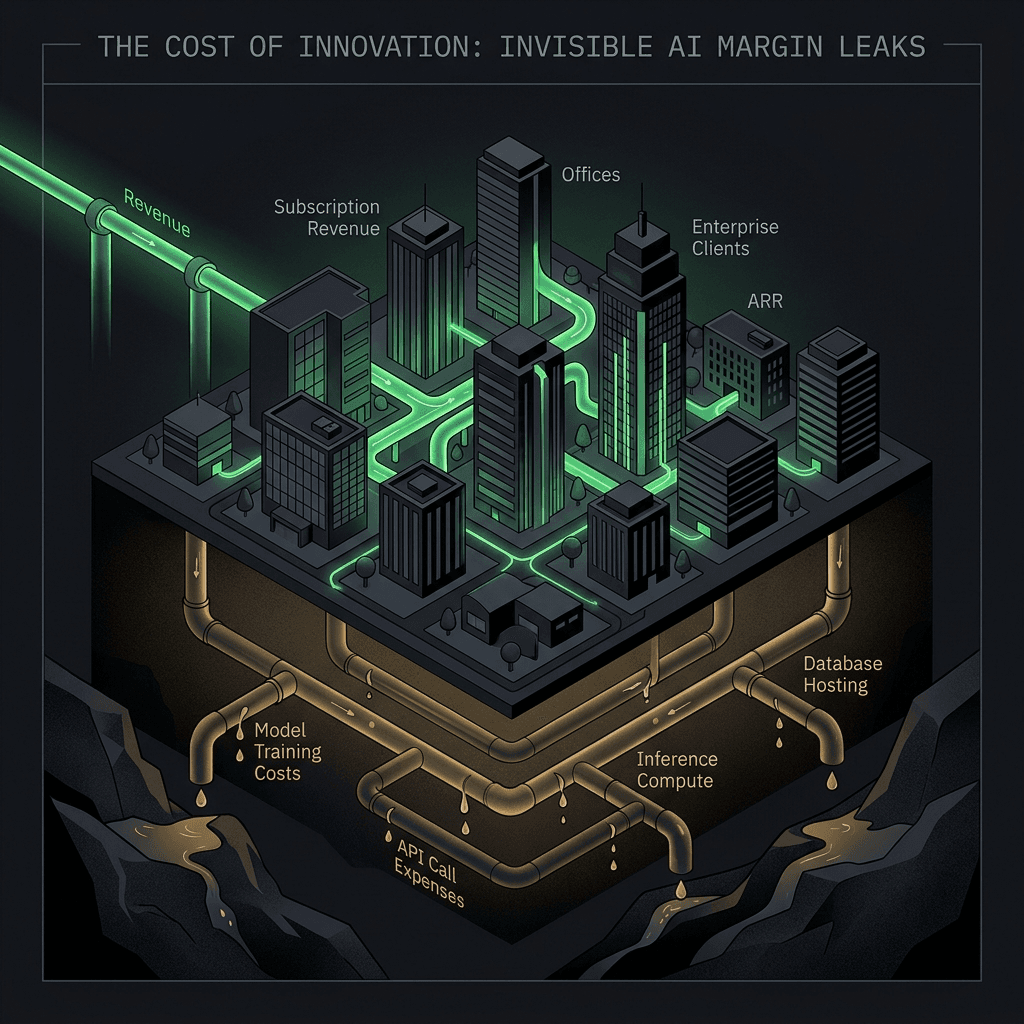
In traditional SaaS, the cost of serving one customer versus another is almost negligible. Whether a tenant logs in once a day or fifty times, your database and compute costs remain relatively flat. AI changes this equation completely. Every prompt, completion, and agent loop executes a paid transaction on external infrastructure.
For the first time in software history, customer adoption and infrastructure costs are tightly coupled. Without per-tenant cost attribution and real-time control, scaling your user base can quietly destroy your margins.
The $99 Customer & The Noisy Neighbor
Imagine two enterprise customers, both paying you a flat rate of $99 per month.
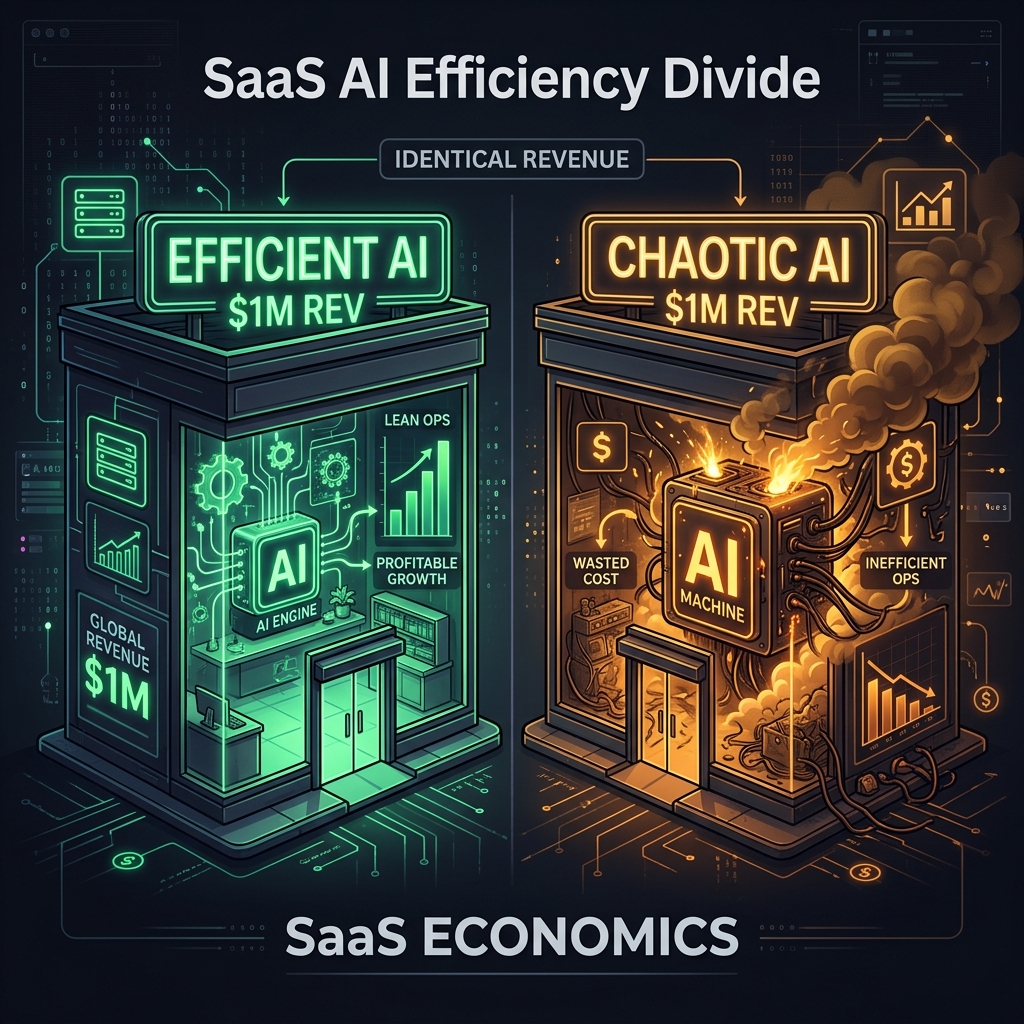
Customer A uses your tool occasionally, generating 100 simple prompts that cost you $2 in API fees. Customer B integrates your application into their internal workflows, triggering agent loops that process long document contexts. They generate 50,000 requests, running up $140 in LLM fees.
On your Stripe dashboard, both customers appear identical. On your OpenAI invoice, Customer B has wiped out the profit from Customer A and turned the account net-negative.
This economics gap gets compounded by the Noisy Neighbor effect. If Customer B spams your system with massive agent runs, they can exhaust your application's shared Tokens-Per-Minute (TPM) limits on the provider side. This doesn't just cost you money—it triggers rate-limit errors (429 Too Many Requests) for every other customer on your platform, leading to system-wide latency spikes and outages.
Why Standard Gateways Break Down
Most engineering teams attempt to solve this by setting up standard API Gateways (like Kong, AWS API Gateway, or Cloudflare). However, traditional rate-limiters are designed for request volume, not computational mass.
A standard rate-limiter can block a user from making more than 10 requests per minute. But in generative AI, 10 requests containing short sentences cost pennies, while 10 requests carrying 100,000-token PDF contexts cost dollars.
To manage AI unit economics, your infrastructure must enforce limits based on token consumption and dollar cost, not raw HTTP request counts.
The Streaming Challenge: Terminating Mid-Stream
Implementing token-based rate limits is harder than it looks because of Streaming (Server-Sent Events). To provide a good user experience, LLM responses are streamed word-by-word.
Because you do not know how many tokens the model will output until the stream completes, you cannot run a pre-check to block the request. You must intercept the response as it streams, calculate the token usage chunk-by-chunk, and terminate the socket connection mid-stream the moment the user's budget is breached.
Here is the conceptual logic required to intercept and enforce limits on a streaming connection:
// Intercepting and controlling a streaming LLM connection in middleware
export async function handleAIRequest(req: Request) {
  const tenantId = req.headers.get("x-tenant-id");
  const budget = await getRemainingBudget(tenantId);

  if (budget <= 0) {
    return new Response("Budget exceeded", { status: 402 });
  }

  // Forward request to the LLM provider
  const response = await fetchOpenAI(req);
  let accumulatedTokens = 0;

  // Intercept the stream chunk-by-chunk
  return new ReadableStream({
    async start(controller) {
      for await (const chunk of response.body) {
        accumulatedTokens += estimateTokens(chunk);

        // Terminate the connection immediately if the budget is breached
        if (accumulatedTokens > budget) {
          controller.close(); // Sever the connection
          await flagBudgetExceeded(tenantId);
          break;
        }
        controller.enqueue(chunk);
      }
    }
  });
}
Building and maintaining this logic across multiple model providers (OpenAI, Anthropic, Gemini) is a heavy engineering lift. It requires custom buffer parsing, token estimators, and synchronized database writes for every single token block generated by your users.
The Next Era of SaaS Is Unit Economics
To scale AI applications profitably, companies must transition from post-mortem dashboards to real-time control.

Waiting for a monthly invoice to find out a tenant ran up a $5,000 bill is a failing strategy. By putting a dedicated control plane between your application and your AI models, you can:
- Enforce budgets in real time: Drop connections or fallback to cheaper models when a tenant's spending threshold is crossed.
- Guarantee Quality of Service: Set dedicated TPM rate limits per customer key so a single noisy neighbor cannot exhaust your global limits.
- Enable usage-based billing: Seamlessly pass AI costs back to your customers or tie limits to specific subscription tiers.
Where Synvolv Fits
Synvolv provides an out-of-the-box AI Gateway that handles streaming token parsing, budget enforcement, and multi-tenant rate limiting without adding latency.
By placing Synvolv between your app code and your LLM endpoints, you get deep cost-attribution and real-time budget enforcement in a single line of code—freeing your team to focus on building features, while we protect your margins.
Ready to take control of your AI costs?
See how Synvolv gives you per-customer cost attribution and runtime budget enforcement.